Thursday, 11 February 2016

I say cataloguing, you say metadata - let's sort the whole thing out

This was a talk and demonstration organised by the Office of Scholarly Communication (OSC) and the Open Access team, presented by Danny Kingsley (Head of Scholarly Communication), Sarah Middle and Philippa Grimstone (Repository Assistant).
Sarah Middle discussed the changes taking place in the institutional repository. Presently known as Dspace, the repository is going to be upgraded and renamed Apollo.
The repository structure is based around communities, which is a coverall term to describe all the departments, faculties and other institutions within the university. Within each community there may be sub-communities (for example for specific groups within a department), and three collections: scholarly works, research data, and theses. Currently the repository is browsable, and searchable by authors and titles, and better subject keyword searching is something being worked on, but it is also well-indexed by Google.
At the moment, it is compulsory for students to provide a print copy of their PhD thesis, but an electronic copy is optional (unless stated otherwise by funder of the PhD). An electronic copy can be self-deposited or done through the OSC.
There are sometimes issues preventing an author from submitting an electronic copy, such as licence agreements and 3rd party copyrights (e.g. in having used images or quotes). However, it is possible to put an embargo of up to 2 years delay on open access which allows time to sort these issues out.
Sarah outlined some projects and future plans for the repository. These include:
‘Unlocking Theses’
When someone requests a digital copy of a thesis, they pay for a copy which can be held in ‘dark space’ in the repository until the author approves it to be made available online (35% positive response rate).
‘Hero Theses’
The OA Team are proactively digitising the theses of famous alumni of the university and holding them in dark space until the author approves its availability (49% positive response rate) – the intention is to encourage people to follow in their heroes’ footsteps and make their theses available online.
Future plans:

  • Creating a “Request a Copy” button
  • Providing a facility for author to claim works and consent to make available online
  • E-theses pilot (taking place in selected departments only)

Philippa Grimstone began with a description of what was meant by ‘Open Access’, and the types of Open Access that exist.

Green OA Gold OA Hybrid OA
Access through Institutional Repository Publishers' websites Both IR and publisher
Cost Free Not free Not free
Limits Embargos (delays)
and restrictions
Available immediately
in final published form
May be embargos or
restrictions applying

Journals can be fully open access, partial open access, or completely closed access.

In order for research to be eligible for the post-2014 Research Excellence Framework, it must comply with the policy of whichever group funded the research in the first place. HEFCE is the biggest funder, and say that peer-reviewed articles must be deposited in an IR within 3 months of its acceptance by a journal. There are other funders too, such as RCUK, COAF and Wellcome Trust, all with different policies.
Philippa then took the audience through the process of depositing in the IR, which is made up of 4 simple steps:

  1. Submit author’s accepted article to www.openaccess.cam.ac.uk
  2. Zendesk® ticket is generated
  3. OA team picks up the ticket and deals with the submission
  4. A record is created of the article within the IR

1. Submission
Which version of an article is acceptable?
Pre-print >> Goes for peer review >> Accepted for publication >> Final version is published
An article can't be accepted until it has reached the third stage (accepted for publication).
2. Ticket generation
Zendesk is the management software used by the OA team, which can be used for communication, will store information, and can generate reports.
3. Processing submission
The OA team deal with answering questions like:

  • what is the funder’s policy on OA?
  • what is the publisher’s policy on OA?
  • what type of OA is used?
  • will fees apply?
  • is this the correct version of the article?

4. Repository record creation
This is done by the OA team based on the Dublin Core Metadata Initiative. There are still problems to iron out regarding author authority headings. In the future it is hoped that Dspace will be able to create automatic citations too.
Once the record is created, it is uploaded to a collection/community and granted a cc-by licence (the default, though others may apply). The author is then informed that their work is available.
Datasets can also be uploaded like articles, but there are more issues inherent:

  • datasets aren’t published like articles, so may be unclear/incomplete
  • there is no standard format for datasets or for metadata
  • there may be proprietary software involved
  • they may be large files (there is a fee for files larger than 1GB)
  • they may be zipped files
  • how much data constitutes ‘enough’? (e.g. hundreds of hours of viedo footage, or several samples?)
  • there may be ethical concerns with making data available

Danny Kingsley rounded off the session with a a Q&A. She mentioned that there are lots of rumours and worries amongst researchers who may be reluctant to put their work online, but perhaps the majority of this is misinformation which can be dispelled by encouraging researchers to talk to the OSC.
Q. Are articles placed in the ‘dark space’ OA-compliant?
A. Yes. While not presently OA, there is a record within the IR of that article.
Q. Are there exceptions to this seemingly straightforward process?
A. Yes, and the OA team do their best to account for everything in each case.
Q. Will the approved manuscript (pre-publication) be retained in the IR even if the final version becomes available?
A. Yes, as this is the version owned by the university, but when the final version comes in, it will be appended as ‘additional information’ to the record of the final version rather than being a separate record.
Q. How do we find out if something is being made available on Open Access?
A. We need to be logged out of the university domain, then try to access the article.
Q. Why can’t we use our archive, why do we have to use the IR? (Faculties with own repositories)
A. You can still, at the moment, and the OSC is looking at ways of porting the data across, before ultimately supplanting the faculty repositories.
Q. How much does Open Access cost?
A. Millions. Gold OA can often cost £1500-£5000, with some major publishers charging £7000. This is in addition to the subscription cost (this is known as ‘double-dipping’, where the publishers charge the university twice – once to publish, once to access) and it is estimated that publishers like Elsevier and Wiley are scalping an extra £2m each out of the university in this way.
What next?
Having attended this talk, I looked at what the museum had deposited in the university IR: two newsletters. I’m sure there must be lots being published, as the staff here are incredibly scholarly and constantly researching things, so the next step is to find out what is happening to this research, and whether it can be shared with the university and beyond.
Update:
I reported back to my line manager and discussed the workshop, and found out some additional things to think about. The first is that museum staff are academic-related, not academic, therefore not subject to the same terms as academics when it comes to things like REF. This also probably has knock-on effects for things like funding, which doesn't pay for specific research so policies for OA may not come into play the same way. The other thing was that a lot of staff publish on academia.edu (not linked here), which is a venture-capital for-profit organisation, and they need to be aware that the data is mined for commercial purposes. It also doesn't count as OA for compliance purposes because it's behind a membership wall.

Wednesday, 3 February 2016

Introduction to Art and Design Resources - an Arlis Workshop

Two posts in as many days? Only because I needed to write about this one immediately so I had to deal with the backlog from all my earlier CPD...(all one of it. Ahem).

Yes, it's been a busy time, but not with work. I've become a parent, and discovered that apparently the feeling that I had no time at all before is nothing like the feeling that I have no time at all now. Fortunately at work I currently have a temp to help me with collection management and other projectwork, which means we're almost treading water sufficiently that I'm slightly more freed up to attend things which will, in the long run, make our job slightly easier anyway.

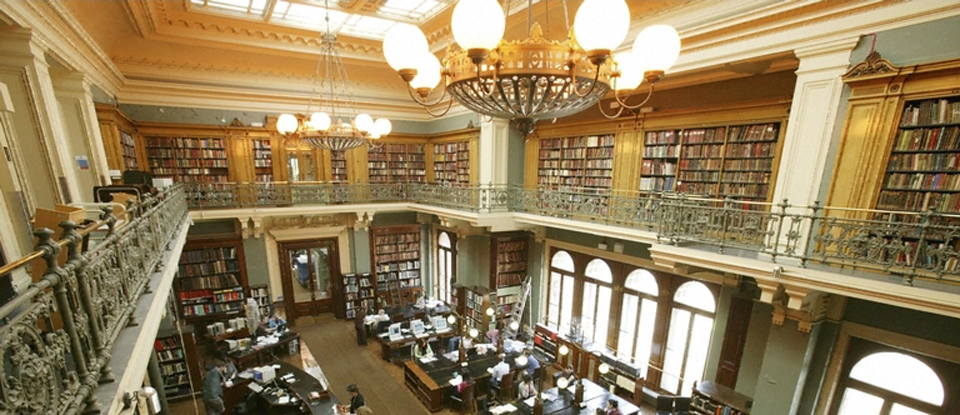
The National Art Library (c)V&A
This was one such event: on Monday 18th January I travelled down to the National Art Library in the V&A for an Arlis workshop. It was an all-day event, and I stayed for everything except the final tour of the National Art Library (getting back in time to pick up the little one from nursery would have been tricky had I stayed).

The library appeared pretty well appointed - they have numerous terminals for readers, with access to lots of online resources. In addition the shelves are full of materials, and there's more in the rolling stacks. They even have a seminar room, where we had a networking lunch - yes it was a little bit cold in the room, but at least they have one! I was very envious - and I think if I ever do go on a tour there, I'll only become more so. Nonetheless, I should try and arrange another visit sometime, in order to learn more about their work and where their collections can support ours.

The event itself consisted of several presentations from a range of libraries, and a hands-on task:

  • Enquiry work in an art and design museum (Bernadette Archer, NAL)
  • Enquiry work in an academic library (Cathy Johns, RCA)
  • Practical session on enquiry referral work: specialist sources (Yamuna Ravindran)
  • The future is paperless! (But the present still needs 3 x 5 cards...) (Joseph Ripp, NPG)
  • Finding connections - art, artist and audience (Jane Bramwell & Allison Foster, Tate)
The reasons for my wanting to attend were multiple.

1. To fill in the gaps in my knowledge and use of standard art resources 
I found Bernadette's talk particularly useful here. She talked about how the NAL deal with their enquiries, which are massively diverse. At the end she supplied a brief analysis of some of the resources they used. A lot I'd come across or use regularly, but there were a few resources I wasn't aware of which seem useful for the library here. The Guide to the Literature of Art History is one such - our reference collection is based both on the museum collections and the interests of the keepers who curate them. When a keeper is replaced, the new keeper will bring new and different specialisms to the museum, which may not be well catered for in the library, so this book is a great starting point to ensure that we have the fundamentals covered.
Success? Yes, lots of good information here, including where to go when I don't know the answers.

2. To ensure my current awareness is, well, both current and aware!
I think I didn't really learn about much here, which either means I'm sufficiently up to date, or that it wasn't really covered. There was again a lot of useful information in Bernadette's talk, with online resources that she uses, and their limits and strengths. EBSCO: ArtSource was recommended as being the most useful, but ProQuest and various other databases were mentioned too, the majority of which we have access to through the University Library.
Success? Yes, I think so. The UL keeps us well-covered for e-resources (although it doesn't subscribe to either AKL or Benezit online. Luckily, we have the hard copies).

3. To test out any resources before potentially purchasing them for my library
This was quite successful in one sense, in that during the hands-on session we made use of the many e-resources offered by the NAL. As museum staff had been asking for access to art valuation websites, I was particularly pleased to have a go with Art Price. However, buoyed up with the possibility of subscribing to this, I later found out that someone in the museum has a personal subscription and everyone gets him to do the searching, so "no need to waste the money". I must admit, I feel a bit flat when people find ways to avoid asking the library for things.
Success? On the day, absolutely. In the end, it turned out more irrelevant than I'd've liked. =(

4. To gain contacts in the area, particularly within museum libraries
I'm really not great at networking. I talked to a couple of people, including someone from The Goldsmiths' Company and a couple of university arts librarians. I thought it was interesting that speakers from museums tended to be people who worked with archives or collections that were considered special in their own right - I'm certainly not in that situation here, so it would be more helpful to make connections with other museum libraries more like mine, assuming there are any!
Success? Low to moderate. I need to be braver!

5. Finally, to raise the profile of my own library amongst those outside the university who might find it useful as a resource
Again, I wasn't great at promoting this library. One thing I hadn't realised was quite how extensive the National Art Library's holdings are when it comes to auction catalogues. They have a lot from overseas, whereas our collection only really focuses on UK, with sporadic German catalogues of antiquities, and the odd French, Chinese and Japanese catalogue from the bigger auction houses. However, I know for a fact we have items in our collection which fill gaps in theirs (and probably vice versa), so the sooner we get our volunteer cracking on the dealers' catalogues project, the better. After this, I am keen to investigate getting our records onto COPAC (currently the UL is there, but none of the other libraries in Cambridge, I believe). The library holds collections of items not readily available elsewhere in the country, so we could do a lot to support scholars from outside Cambridge if only they knew about it as a resource.
Success? Low. Getting our collections visible on the web will do more, I think.

On the whole, more successes than failures (and nothing was really a total failure). Definitely worth going on the course, and I'm very grateful to my line manager and the HR manager at work for supporting me and allowing library budget to be put towards this useful training.

Tuesday, 2 February 2016

CaKE 2: Attack of the Gin CaKE

CaKE 2 took place in February 2015, so a long time ago now. However, I made copious notes at the time, so they’ve jogged my memory sufficiently that I feel I can talk about the event with an air of authority. But if I’ve missed anything, or anything piques your interest further, you can access the Storify here and the main CaKE blog here.

First was Lucy Welch, talking about the accessibility issues of non-print legal deposit materials, which was the subject of her dissertation. Now publishers are able to choose to provide LD copies as print or non-print, obviously it’s cheaper for them to go for non-print; however this causes a number of issues for LD libraries trying to offer access to these materials:

  • Lots aren’t accessible for the visually impaired – using personal devices would benefit accessibility, but publishers aren’t really on board with this idea.
  • Usually they’re read-only and users can’t print out copies – this is worse than the previous situation as readers could take photocopies from print materials, but now libraries can’t provide a loan copy or print off a copy for users.

Her conclusion was that there is a wide gap between user expectation and the reality, but that libraries are firmly on the side of the readers so improvement in the situation is likely.

Liz Osman then took to the stage, discussing what she learned at the Rare Books and Special Collections Group (RBSCG) conference. This was with a view to creating a special space for the rare books in her library, so this talk was specifically geared towards improving knowledge of housing rare books collections in the non-specialist library.

The conference covered a wide variety of projects. One of the tips Liz pressed home was when planning for something like this, to ask for everything, so if you have to make cuts you've got more to work with. Another useful thing to note is that the British Library Collections Care team will come and do free monitoring of a rare books space, but offer paid services for anything more.

Other lessons Liz learned for rehousing projects were:

  • Librarians and archivists know best - don't let others tell you what you need
  • Demand contracts are written: promises are worthless
  • If you're leading a project, bring your team with you; it can be disruptive and scary for them if they don't know what's going on.

I think this was a useful talk, because there’s a lot of practical advice there which is applicable to all projects, not just those relating to special collections.

The next talk was from Celine Carty, who attended the Cataloguing and Indexing Group (CIG) conference. This was a more general overview of what the conference is like, which is helpful for anyone wondering if this conference is suitable for them.

For something so specific, it actually covers a wide area, and all kinds of libraries, from BBC footage metadata to the pharmaceuticals industry. Talks can be quite technical, but Celine assured us there wasn’t too much RDA! It’s quite a small conference, so attendees don't have to choose between talks, everyone attends everything. There were two points that Celine really impressed upon us:

  • Don't worry about feeling like a fraud for not being a good cataloguer, everyone feels a bit like that!
  • Go for bursaries too, often there are not many applicants

It certainly sounds like a conference I’d like to attend at least once, just to get the flavour of what’s happening in cataloguing. I’m not a cataloguer, but I have to catalogue, so knowing where to go for the best information would be really helpful.

Clair Castle covered her experience at the UK Serials Group events. My notes say check out the blogpost for this one, which is available here. The talk touched on a number of things, covering altmetrics, good networking, open access, things libraries should be providing (such as getting libraries to do Open Access instead of academics). She did that it could be quite overwhelming, as these are quite big conferences.

The next talk was a very practical one: Claire Sewell and Katherine Sendall, with Presenting Conference Posters – Some Top Tips! The presenters drew on considerable experience for this talk, which made it highly accessible and full of ideas for implementation. Advice and comments included:

  • Posters are great for shy people because interacting one-on-one with individuals is a lot easier than addressing crowds.
  • Posters are there to share ideas, like a visual essay. So make sure you have clear headings, try not to be overwhelming with information, and make sure the logical path is easy to follow.
  • Your poster should be eye-catching but not cluttered. Use a sensible font, readable from about 3 feet away but attractive from 6 feet away.
  • Include contact information!
  • Look up examples online, there are often good tips available (Colin Purrington’s website is good).
  • 800 words is about right, don’t go any higher, but you can use less.
  • Be careful choosing colours - dark backgrounds make a poster hard to read.
  • Font size should be 24pt minimum for text (headings should be bigger).
  • Creating it in PowerPoint is fine, then it can be saved as pdf before printing out.
  • Think about the kind of questions you're likely to be asked so you can prepare answers.
  • Speak to the person, not your poster!
  • Bring correction materials in case anyone spots any errors!

The next talk was one I was particularly interested in, as it focused on an event I couldn’t make in the end: Chris Barker, with UX and ethnographic methods for librarians.

It was a very practical day, full of discussion of methods, including cognitive mapping, interviews and diaries. One particularly successful method of gaining feedback (used in a lot of college and faculty libraries around Cambridge!) was the graffiti wall – somewhere with post-its and pens where users could write comments (‘can we have sofas’, ‘lights not working’, and so on); informality works well. The workshop then included the attendees trying things themselves to get idea of how users feel.

On the whole I’m starting to have mixed feelings about the usefulness of UX in libraries – at least, UX in my library. I think it works best in a large, diverse library, where maybe you have a lot of repeat visitors (like students in college/faculty libraries), and you don’t really get to know how they work and what they’re succeeding and failing at when using the library (or choosing not to). This isn’t so much the case in the library here, where the library staff engage directly with every user, every time.

There are other aspects I’m not so comfortable with too – one is the lack of reliability. Because it’s so focused, UX is really valid for the user or users it samples, but it’s too small-scale to be reliable, therefore it has to be used in conjunction with other, larger-scale methods to ensure that you’re not just changing everything around to suit one person, thereby inconveniencing thirty others. The other problem is the question of ethics. When conducting research, it was firmly drilled into me that shadowing or observing people without their knowledge is at the very least, morally dubious. However, by making your presence known, you affect the result. So do you want detail and validity, or ethical soundness and the Hawthorne effect? Decisions, decisions..

Jo Harcus discussed attending three management courses, including an ARLG event. Despite being quite diverse management courses, there was some overlap, and a lot of what was covered was applicable to the library setting. Some of the real take-home points she made:

  • Management and leadership aren't the same thing, but both sets of skills are important.
  • Often people have a natural dominant management style, but may be required to adopt different styles to get the things done.
  • Authentic leadership: leaders are self-aware, knows their strengths and weaknesses, are open, and acknowledge that management is a process, you're always learning and improving.
  • Communication is key. Unexpected responses give you a clue to what's the problem.

Corpus Christi runs these sorts of courses, with a staff discount, so keep an eye out. She also encouraged interested people to participate in the library leadership reading group (#llrg).

This was definitely something I wouldn’t have thought twice about (I am obliged to do very little in the way of managing or leading at work), but Jo made it sound interesting, and the courses aren’t that costly, so this is something I hope to revisit in the future.

Getting toward the end, the penultimate talk was from Helen Murphy, who had attended a course on copyright.

The course was quite expensive, so think twice before going on it. It also assumed a lot of prior knowledge of copyright issues, but there were lots of areas where a lack of knowledge didn’t impede her. The course covered, amongst other things, accessible copying, preservation copying, what is "reasonable", VLEs, and what to do if you get found breaking the law. These areas were covered mainly by actual scenarios, so the take-home point for Helen was that copyright is often a thorny area, and there’s not always one right answer. A useful link provided was www.copyright user.org, and for more information on digital copyright there’s also the UKEIG (UK e-Information Group in CILIP).

Last, it was Charlotte Hoare, who went to Marketing Your Library, a social media workshop run by Ned Potter, which I believe he does on a reasonably regular basis, so the opportunity to attend will come round again. There were lots of important messages from this:

  • All marketing is communication, all communication is marketing.
  • Avoid white noise. Be timely and personal; talk benefits, not features.
  • Promotional activities are not enough. It's a cyclical process including dialogue between library and user.
  • Have a plan, document it.
  • Make sure your team is with you.

And his rules for social media:

  • Know why you're there
  • Don't overcommit
  • Get the tone right
  • Chase engagement, not numbers
  • Listen!

I thought there was a lot of good stuff coming out of this, but I would have liked more practical information rather than these sorts of overarching objectives – hopefully though I can go on the course, and get the practical help I need to market my individual library!

Finally we read through the post-its which we had filled in at the start as an ice-breaker: what makes a good conference, how do you get the best out of a conference, and which conferences/courses would you recommend to others. These are all available on the CaKE blog.

One tip that really sunk in was that it’s a good idea to always ask for training budget money every year. Even if you’re not successful every time, it gets your institution into the habit of expecting to give the library money for training, which hopefully they’ll then start to set aside as a matter of course.

So that was the workshop – phew! We covered so much, and I really enjoyed it (and the cake was superb!). There was lots of new information to take home, resources that other people discovered and shared, and ideas for the future. I couldn’t go to the last CaKE because I was on maternity leave, but if there’s another one, I’m going to be there with bells on!

Monday, 23 March 2015

Checking in...and checking out again!

I'm checking iiiiin!
Time for an update, methinks. It's been a hectic two months back at my substantive post, with a few problems I've had to sort out with only a very tight deadline to do it in. Our serials aggregator declared itself bankrupt after we'd already prepaid, so there have been a lot of headaches caused by working out which periodicals we could spare for a year and which we couldn't, getting in touch with individual suppliers, and setting up new subscriptions while we dealt with the fallout, and taking the opportunity to sort out some periodicals which for one reason or another had fallen by the wayside. Then there was the cataloguing backlog which increased suddenly when we'd just received a huge delivery of books from a reactivated standing order along with all the other books we get in regularly. So that, combined with the usual reader enquiries, sorting out book orders for staff and the more routine tasks - like I said, a busy two months! Still to be accomplished are all the new things I wanted to set up following my return from secondment, like a library blog and an online graffiti wall, but as the museum website is undergoing a major overhaul, now was not going to be the best time to hassle our overworked IT staff! Still, I can keep plotting, maybe liaising with other Cambridge Museum libraries in the meantime about potential opportunities for collaboration and come back with fresh energy at a more convenient time.

Also currently taking a bit of a hit is my CPD. All the conferences are happening now, and I can't go to any of them! In particular I was most disappointed about missing the UX conference taking place in Cambridge over the last few days. UX and Ethnography in libraries is the hot new thing, and I was keen to learn more, but alas, I've had to make do with the twitter feed alone. Others I'm missing include both the UK and International music libraries conferences, so many workshops for art librarians, rare books, special collections, and the more generic library conferences like Lilac - most of these I can at least try next year, there's not much specifically drawing me to this particular year for a lot of them, but I do feel very aware that I'm looking at a year where I'm not taking on anything new or learning anything. To make up for this, I've accomplished two smaller things. The first is my first ever MOOC - Digging Deeper, which was a manuscripts and palaeography course run by Stanford with the UL, which is an amateur interest of mine. This was a brilliant course for my first MOOC, and I really enjoyed it; so much so I've immediately registered for the next one, which also covers music manuscripts (a slightly less amateurish interest of mine)! Once that's over, I'll no doubt be hitting up the Queen of the MOOCs (aka @ces43) for advice about other good courses to take!

Libraries and cake work together so well...
The other small thing proved not so small, really, which is why it's taken me so long to actually get round to writing about it, and that's CaKE 2. Cambridge Knowledge Exchange is the brainchild of two super librarians in Cambridge. Lots of conferences get attended by many of the librarians throughout the university, and there are even more librarians who don't get to go but who'd love to hear about them, so we get together (over cake, naturally) and the attendees share their impressions of the conferences they've attended, and any useful advice or information they've acquired.The first one of these was great because it introduced me to a few conferences and groups I'd not heard of before, but which sounded worth pursuing, while this time around, I think I'd heard of most of them, but had wanted to attend a few, so was really pleased that they were being reported on. This is basically going to be my CPD for this year, as I said, so it was definitely worth attending just for that. I made copious notes, so I think CaKE deserves its own separate post. I should have time now, seeing as I'm on leave for the next few months, leaving the library in capable hands! So hopefully it won't be much longer before my next post...

Monday, 26 January 2015

Musical (and other) developments

One of my non-work accomplishments
over the last few months: Jolteon!
I think it's been a long time and I need to update again. I have been blogging fairly regularly, just not here! 

Firstly (just to get it out the way), I got back into crocheting again, and finished off a number of projects, including a couple which I'd been working on for many months, so my crochet blog got updated quite heavily. 

Secondly, from mid-August to the end of December last year, I was lucky enough to get a secondment to the University Library Music Department and the Pendlebury Library of Music, and they have a blog between them, which I took part in updating. These were my posts - hope you like!
In particular, I won't regurgitate my reflections about the time I spent there, since I covered that in my last blogpost with them. I will say it was wonderful to work with a team, to learn lots of new skills, to see how others works (and bring back the best/most efficient bits of their workflows, while helping them streamline theirs where possible!). I hope they gained something useful from having me there, too!

It did come at a rather odd time though (what with other things going on at my library and in my personal life), and I've come back to my work with something of a sense of frustration that time has rather stood still in the library while I've been away. There are some projects I'm very excited about that have been accomplished, including a massive bequest of books from an old curator having been processed so we now know what we have!

But there's a lot of work to catch up on, which is annoying when you come back with lots of fresh ideas and new initiatives that you want to try, and first you've got to get the general slogwork out the way before you can tackle anything new. Just don't mention periodicals to me for a while!

Still, while I do miss all the music, it is quite nice getting back to all the picture books! (Some of them, anyway..)

Friday, 25 July 2014

ARLIS 2014: The Journey Continues

Two things I did at the conference I didn't write about in the last post because I wanted to give them a fair hearing: the visit to the John Rylands Library and the break-out sessions I attended.

The visit to John Rylands is mostly just pictures. Someone else wrote about it, and made notes on all the facts during the tour, so I didn't bother, I just snapped the things that interested me.

We started here, at the sculpture of Archimedes. Some wag had left a deflated balloon hanging out the corner of his mouth.
We walked past Chinatown, which is the second biggest in the UK (after London) and has the second biggest gate in the UK (after Liverpool).
The round Central Library, just peeping out from behind the other building there.
And here is the John Rylands Library, looking very imposing.
My phone isn't great with handling bright lights and dim corridors, so lots of blurriness I'm afraid. We meet Stella Halkyard, the Visual Collections and Academic Engagement Manager.

We're taken round some of the exhibition spaces. Some are rotated fairly frequently, while others are only removed for conservation care.

The very grand entrance hall - much more forbidding than the modern bit they've attached now!
This is the Historic Reading Room. We were given a lot of the history of the building, and John Rylands' wife, who sounded a pretty imposing figure!


Now we get to the really interesting, behind-the-scenes stuff. One of the issues is that over the years, librarians knew how to deal with the books that came in, but there was a more haphazard approach to images and other non-book items, so we learnt a bit about the challenges Stella faces.
Although you can't really tell, the floor here is glass, to allow light through three floors of bookstacks! In the right spots, you can see down past the floor to the storeys below. The ceilings here were really low.
An interesting door. Taking this picture I nearly got locked into the basement stacks!
One of the original toilets (I think)!

I did enjoy the Victorian Neo-Gothic architecture, although being so used to the really old buildings round Cambridge I couldn't help but feel that it just didn't look crumbly and dilapidated enough! It was really interesting finding out about the history and ethos of the library, and what they're doing in outreach now. If Manchester was a bit closer, I'd definitely try and come along to one of their workshops, which sound like a lot of fun.

Break-Out Sessions

I attended Gaming in the Library and the Update to RDA - one for me, one for my work! The RDA update was really useful, even though we were a very small class, and I learnt about forthcoming opportunities to improve my RDA knowledge and practice, and about resources already available. I'd never heard of the Yellow Book (Art exhibition documentation in libraries), which I've now ordered for my library. Also if I can spare the budget I think it would be really useful to have the print copy of the RDA Toolkit, since I get logged out of the online one entirely too often!

Gaming in the Library was interesting too. The slides are available from the link in my previous post, but I also took a few pictures of some of the games Andrew Walsh brought with him.
These are Library A-Z cards, which we used as visual cues for challenges we face in our work. We had to pick a picture that spoke to us, and explain what it meant and what challenge it represented. This method works as a safe space to talk about things and make them less scary, and apparently works really well with Lego, and getting people to build the challenges.

These are two of the card games. The first was designed to teach students how to build references correctly, and the second a quiz to test information literacy. There was also a Top Trumps style game, Top Resources, where students could fill in the cards with the resource they were using, and give it marks on ease of access, breadth and depth etc.

The point Andrew made was that playing these games would take about as long as lecturing students on resources or skills, but by playing the games, the students are more actively engaged in their learning and therefore more likely to take on board the message behind them.

After that he discussed gamification - using gaming mechanics in non-game environments. I have to be honest here, I loathe gamification. On the one hand I'm too competitive and perfectionist, which means I get sucked in unwillingly and will do all the ridiculous things necessary to get 100% on everything. On the other hand, I'm really not a social gamer *at all*. I'm not interested in seeing how I compare to other people, and my favourite games are single player.

So something like Lemon Tree, which is gamification of library usage at the university, seriously wouldn't appeal to me (or at the most I'd try it out, quickly get really annoyed with it and delete it or never use my library card again). However, for those people who enjoy that sort of thing, I guess I can see how it works, and best of all (imho), it was entirely optional for the students.

ARLIS 2014: Reaching New Peaks

For about the last three years, since I took over running the library from my predecessor, I've often felt I've been playing an arduous game of catch-up. On the face of it I've been running this place in much the same way, with certain things improved (like unique classmarks for different books) and cataloguing certain things which needed to be made more visible, like our collection of Sotheby's and Christie's catalogues, but underneath the surface I have been scrabbling around like a mad thing, trying to find out everything I need to know to actually do a good job, not just as far as the staff here are concerned, because let's face it, none of them are librarians and don't actually know how great a resource it could be.

ARLIS was one of those things under the surface - I'm a relatively new member, and a personal one at that. Work doesn't appear to have ever bothered with it, nor the librarian, which meant it was very difficult to justify to my line manager exactly why we needed to join up. I gave up trying in the end, and just joined for myself. The worst part was, I'd never even heard of it until a passing comment from one of the librarians at the Faculty of Architecture and the History of Art*. I don't know why it hadn't occured to me that such a thing might exist - after all, I knew about IAML, and BIALL, and there'd even been a conference in Cambridge when I was working in an art library - how had I missed that?!

Manchester, by PimlicoBadger
Anyway, though I'm seriously pants at networking, often the best bit about going to conferences is talking to people and making new contacts. I felt like I owed it to the library to try and put us on the radar a bit, so that was one of the aims, to say to people "Hi! My library exists!" The second aim was to learn as much as I could about all the things I should be doing and don't know to do - all those unknown unknowns, as Donald Rumsfeld might call them. Thirdly, in addition to telling people about me and my library, I wanted also to find out about them and their libraries, and perhaps organise some visits to libraries like mine, to find out how they cope with challenges similar to the ones I face. And finally, one of the breakout sessions was on Gaming in the Library. I'd seen so much about this sort of thing happening all over Twitter, and was insanely jealous at the thought of all these people getting to play with Lego and calling it work, and was keen to find out more!

Sweet stash!
So off I went, daunted at the prospect of driving 4 1/2 hours, alone, to a place I hadn't been to since I was about 15 (and only to visit MUFC's ground and get my shirt personalised with Cantona's name and number), to spend the next three days with about 70 strangers. Why was I doing this to myself again? It wasn't even as if work was paying for it either! Anyway, I arrived, registered, and made approving noises at the quality of freebie stash, including a pen that lights up when you hit someone something with it, and got started on my Arlis Adventure!

There were so many talks from a wide variety of speakers - lecturers, researchers, students, artists, curators and librarians, that to try and list them all would just take far longer than I can stand to write, and - I'm sure - you can stand to read. The programme is available, and I think different people are writing up each session for the Arlis newsletter, so I won't try and describe every single session, just the points that I took home.

Some of the things libraries can do really well
The keynote speech: "Library Futures: Opportunities Not Threats". The speaker was pretty controversial, coming to a subject-specific conference and telling us they'd got rid of all their subject librarians (except for music and foreign languages). However, there was also a lot of value in what she had to say. One point she listed everything that librarians and libraries can be good at - I think I got most of them down. Another point I thought was important was that the library strategy should be bold and align itself stringently with the strategy of the parent institution. Theirs stated: "The library will be vital to [achieving this stretch goal]" - very bold indeed! Finally she stated that libraries should be considered partners, not servants, by their institutions. How much would I love this to be the case here?!

This was from a talk about the refurbishment of Manchester Central Library. Their music library now has guitars and drums for silent playing as well as keyboards - brilliant idea, and I would love to see this in Cambridge Central Library too!

This was a lovely illustration of the sort of work that The National Archives does (although the speaker took great pains to assure us she'd never seen an archive quite in that condition!). I had no idea they were part of the Ministry of Justice, which I suppose makes sense when I think about it, but I was surprised to learn this.

The release of what sounds to be a wonderful resource: The Art Discovery Group Catalogue, which indexes the holdings of 60 art libraries around the world. Promote this to your users! Apparently they're exploring solutions for libraries with significant art holdings within a larger general collection too.

For the visits, I went on the tour of John Rylands Library, which I'll cover in a separate post, along with the breakout sessions. The conference reception and dinner on the second night was held at Manchester Museum, which has some fabulous natural history collections.

Meet Stan
Here's Stan, the second most complete T-Rex in the world, with the most complete skull.
I think this was Percy, it might
have been the other one though..

And there's Percy the Plesiosaur.

Definitely an interesting place to have a dinner!

Finally a couple of points from the Library Impact Data Project talk. I'd seen some earlier findings presented at a lib@cam conference a few years before which were really interesting. Of course, correlation does not equal causation, but when evidence strongly suggests that people who use libraries will get better degrees, that's a good position to start from in discussions at your university. Even more powerful was the statement that those who do not engage with their library at all are more likely to drop out of university entirely! There's a follow-up project happening now, JiscLAMP.

What did I learn? Here are my final thoughts and findings:
  • There was a lot of value placed in kinaesthetic learning, and being able to handle things, not just look at them - this from all the academics, students and librarians present, and not just those from art backgrounds.
  • There was a definite tension between the need (and desire!) to provide a personalised/boutique service a la Priestner & Tilley, and the fact that art libraries are being marginalised or lumped in with other services.
  • I learnt there were specific needs that art-related subjects have that other subjects don't - for example, most art books are massive, therefore art students need more deskspace!
  • One librarian said she felt "bruised, damaged", from having to fight the same battles over and over again, and this conference was a way of rediscovering the passion she had for the job. It was nice that we could support each other, but at the same time I think it's really sad that we do have to constantly defend the existence of even the really specialist libraries with unique and significant collections.
  • A lot of non-librarians were keen to impress upon us just how vital the library collections were for their work - both as research material and as a source of inspiration - and informed us it wasn't just librarians who are passionate about the collections!
  • I couldn't help but notice the not-insignificant North American contingent of librarians, which says a lot about the quality of the conference, I think. Also enabled wider sharing of experiences and expertise, which was great!
  • I got to meet lots of librarians and information professionals from a wide variety of institutions - mostly universities, but also the Henry Moore Institute and the Scottish National Gallery. But no two university art libraries seemed alike either, covering a wide range of subjects too - art history, visual arts, 3-D arts, fashion design, architecture...
All in all, it was a great opportunity. I met lots of wonderful people, learnt lots of new things, and about key resources I'll want to try and obtain for my library. It was a valuable half-week away, and hopefully I can get involved again next year!


*Incidentally I found out about the existence of the Faculty and Departmental Libraries meetings the same way - but much more recently. I still need to find out where Basecamp actually is too.

Final Thoughts

Made it! So, in the end, what do I think? Image by Ralf Kunze from Pixabay I did this as a way of trying to stay connected with my l...